The God Who Goes Before You
This sermon was preached at Sherwood Community Friends Church on Sunday, April 12. You can watch the video in full by clicking below.
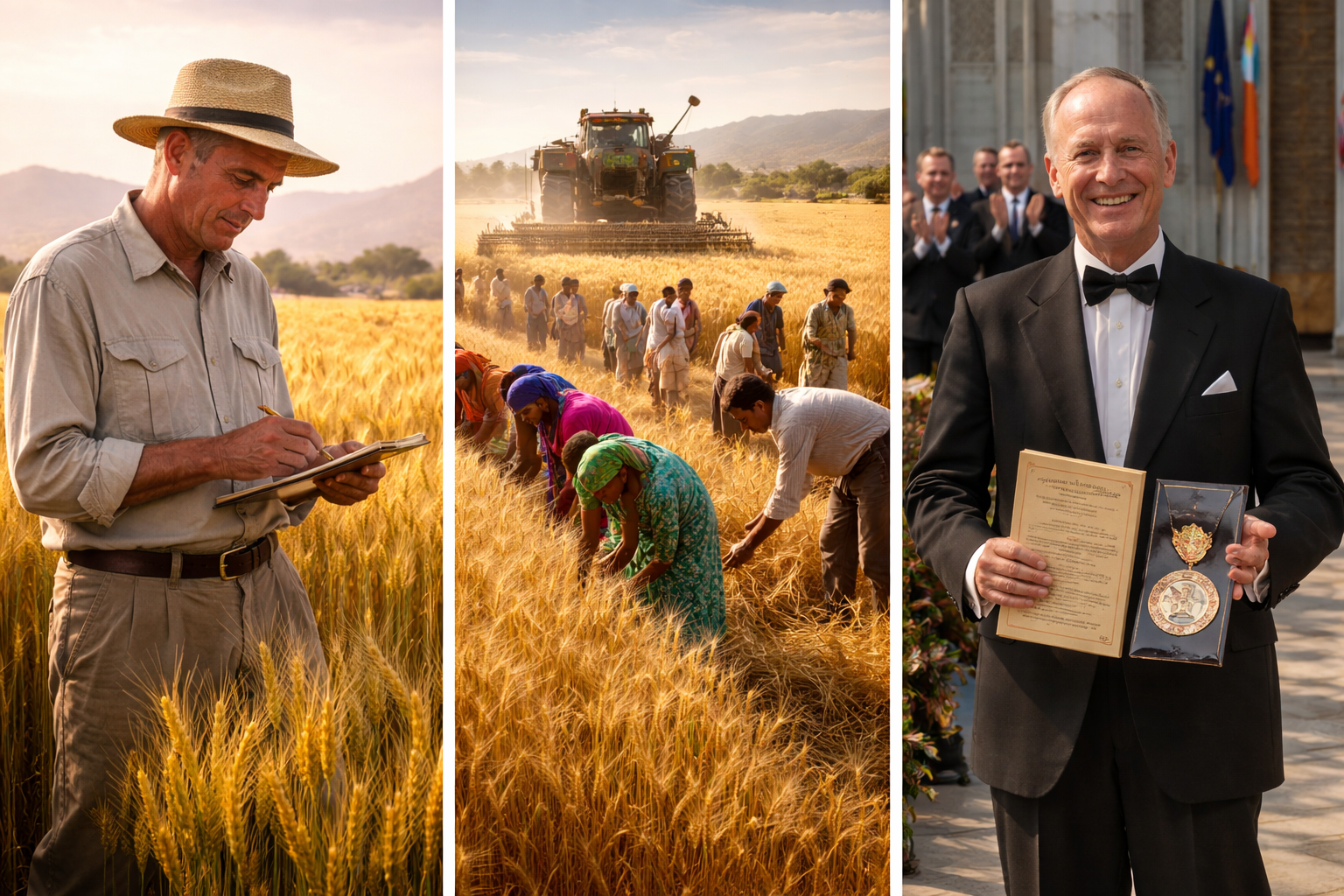
In 1944, a 30-year-old agricultural scientist from a small farm in Cresco, Iowa received a phone call from the Rockefeller Foundation that would change the trajectory of human history. His name was Norman Borlaug.
They were looking for someone willing to go to Mexico to leave what was familiar, head into conditions that were difficult and uncertain, and try to solve a catastrophic wheat rust disease that was destroying crops across the developing world.
Borlaug said yes. He packed up, left behind the comfortable and the known, and went.
For years he worked in the fields of Sonora, Mexico under a brutal sun, in conditions most researchers would have walked away from. He developed a new strain of semi-dwarf, disease-resistant wheat, but nobody yet knew what it would produce. So he just kept working.
By the mid-1960s, India and Pakistan were facing mass famine where hundreds of millions of people were on the edge of starvation. Borlaug's wheat varieties were introduced. Yields doubled and tripled. The predicted catastrophe was averted and the Green Revolution spread across continents, transformed nations, and is credited with saving the lives of over one billion human beings.
One billion.
One man. One calling. One decision to leave the familiar and go. And through him, every nation on earth was touched.
I want you to hold that story in your mind as we open the Bible this morning, because we’re about to read about a different man— much older in human history, never celebrated in the halls of science, but a man who received a call making Borlaug's look modest by comparison.
RECAP OF GENESIS 1–11
For those of you who are new with us, or those who need a quick refresher because you forgot about 80% of what we talked about in our GENESIS: The Preface series, don’t worry, I’ve got you. Let me lay the theological foundation for everything we're about to cover.
We spent the 8 weeks prior to Holy Week walking through the first 11 chapters of Genesis. Genesis opens with God creating and ordering a world designed as a sacred dwelling— a cosmic temple where heaven and earth overlap, where his presence fills everything. God creates the pinnacle of all his creation, human beings as image-bearers: people made to carry his character into the world, partner with him by extending his blessing outward, and live in deep relational trust with the God who made them. It was ordered, purposeful, and, as he said, “very good”.
Then Genesis 3 fractures everything. The first humans, confronted by a chaos creature in the garden, make the one choice to reach for wisdom to define good and evil on their own terms — apart from God — and the world has been paying for that choice ever since.
But here is what most people miss. Right there in the middle of that fracture, God speaks a promise— not merely consequences, but a redemption declaration embedded in the curse itself.
Genesis 3:15 CSB God said to the serpent, "I will put enmity between you and the woman, and between your offspring and her offspring. He will strike your head, and you will strike his heel."
Genesis 3:15 is the first announcement of the Gospel in the entire Bible. The rest of Scripture is the story of God keeping that promise until the seed of the woman finally arrives and does exactly what was announced.
From that Genesis 3:15 moment, a question quietly threads its way through every chapter of Genesis and every book of the Bible that follows: who is this offspring? Who is the seed of the woman who will one day crush the offspring of chaos, disorder, and evil at its source?
Chapters 4 through 11 trace how far the fracture spreads. Brother killing brother. Egregious violence. Everyone was doing what was right in their own eyes. A flood. A second chance through Noah. Then the Babel incident spirals humanity to consolidate, ascend, and attempt to make a name for itself rather than trust God to go outward as he designed. This resulted in God scattering the rebel collective self-elevating nations, assigning them to lesser spiritual beings while he waited for the right moment to begin his countermovement.
That countermovement begins where we are picking up the story with the call of one man that launches the seed line's next chapter through Mesopotamia to a family in Ur of the Chaldeans to be God's answer to everything Genesis 3 broke.
MEET ABRAM AND SARAI
The panning Biblical camera zooms in on one family. Let’s go meet them.
Genesis 11:27–32 CSB “These are the family records of Terah. Terah fathered Abram, Nahor, and Haran, and Haran fathered Lot. Haran died in his native land, in Ur of the Chaldeans, during his father Terah’s lifetime. Abram and Nahor took wives: Abram’s wife was named Sarai, and Nahor’s wife was named Milcah. She was the daughter of Haran, the father of both Milcah and Iscah. Sarai was unable to conceive; she did not have a child.
Terah took his son Abram, his grandson Lot, and his daughter-in-law Sarai, his son Abram’s wife, and they set out together from Ur of the Chaldeans to go to the land of Canaan. But when they came to Haran, they settled there. Terah lived 205 years and died in Haran.”
A family tree, a location, and one quiet, devastating detail: Sarai cannot have children.
But let’s slow down, because there’s more here than it first appears. Terah had three sons, and one of them, Haran, died young in Ur, before the family ever moved. Haran left behind children.
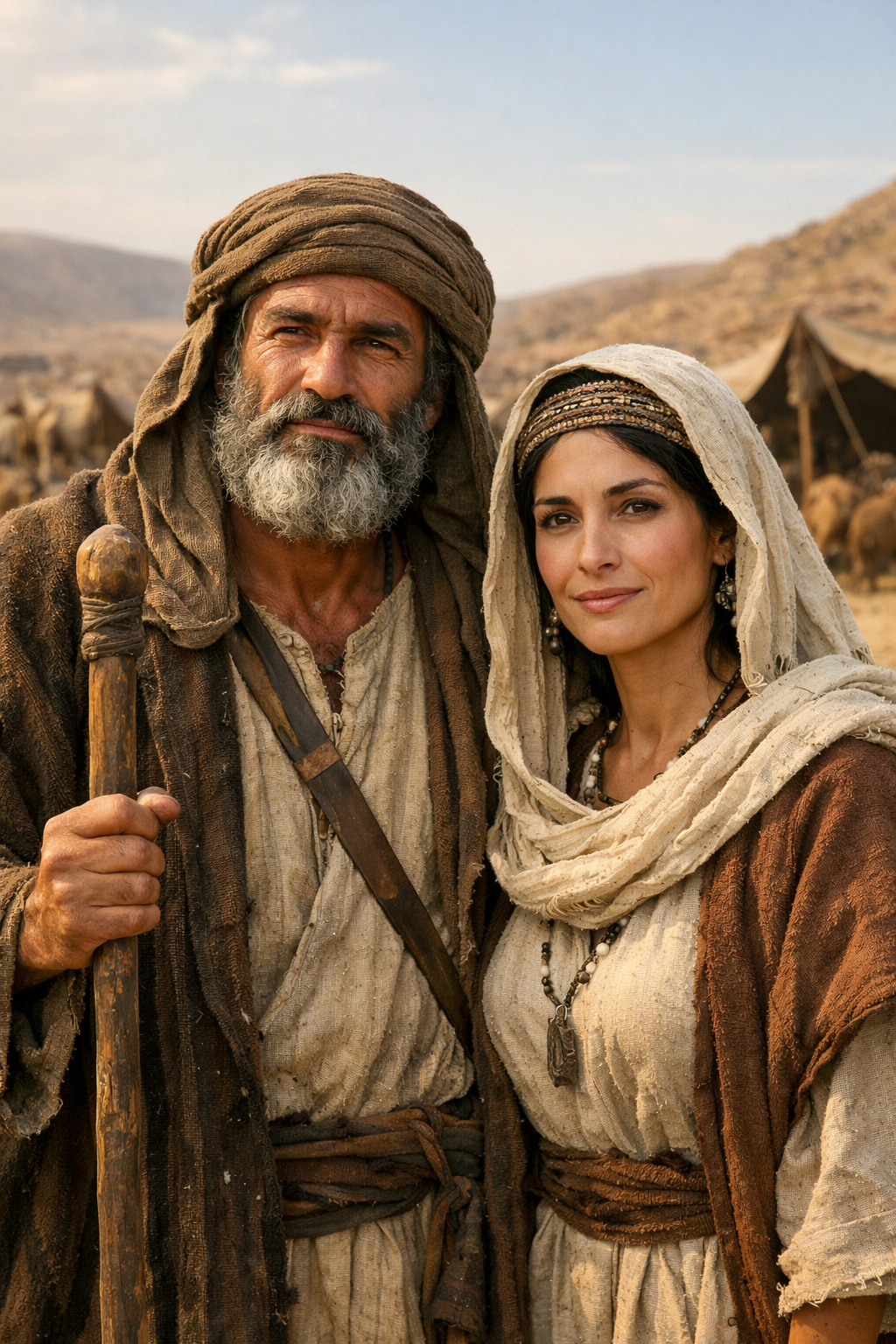
Early Jewish rabbinic tradition (from the Midrash* — ancient Jewish commentaries on the Old Testament scriptures) suggests that Sarai and Haran's daughter Iscah were the same person. If that is right, Sarai was the orphaned daughter of Abram's deceased brother. She would have been barren in a world where barrenness was not simply a medical condition but a source of deep social shame. It’s suspected she may have been previously married and returned to her family when her husband discovered she could not conceive.
So when Abram married Sarai, he was not simply taking a wife, who happened to be his cousin, which was quite common to do in those days. He was taking in a woman his world had discarded. He surrendered his own claim to a family name and a legacy to protect someone who had nowhere else to go. Abram practiced sacrificial hospitality.
We also see something strikingly similar later in the Old Testament book of Ruth when Boaz steps in as kinsman-redeemer for a woman outside the covenant who had nothing left. Abram set the precedent for Boaz to follow.
Can you see how we’re barely past the introduction of who Abram is and already there’s a portrait of Jesus on this man who will become a major patriarch in the Biblical storyline?
One more thing worth knowing: Abram was not a lifelong worshiper of Yahweh when God found him. He grew up in Ur of the Chaldeans which was a city deeply devoted to the moon god Nanna. Joshua 24:2 says plainly that Abram's family, including his father Terah, served other gods. It seems God was preparing to purge them from their prior identity, cultural and societal systemic worship of these gods by moving the family toward Canaan so he could speak and they would be ready to listen.
THE CALL THAT CHANGED EVERYTHING
Genesis 12:1–3 CSB"The Lord said to Abram: Go from your land, your relatives, and your father's house to the land that I will show you. I will make you into a great nation, I will bless you, I will make your name great, and you will be a blessing. I will bless those who bless you, I will curse anyone who treats you with contempt, and all the peoples on earth will be blessed through you."
Let’s hover here. This is one of the most important passages in all of Scripture and a major theological hinge point. Everything before Genesis 12 has been the problem unraveling. Everything after Genesis 12 is God's answer to it.
The world in chapter 11 is scattered, estranged from its Creator, with the promised seed of the woman still unfulfilled. Yet God's response is not another flood. It is not a military intervention or a lightning striking smite on all the people. It’s a call.
God shoulder taps one ordinary man in a grieving family, going about his own life, and standing in a city that serving other gods was deeply ingrained into every aspect of their culture.
Look at what God is promising.
First: a land, but he doesn’t give a colorful description in advance. Abram had no clue. God just said, start moving and trust me with the destination.
Second: a people who will become a great nation. Keep in mind, this is said to a man standing next to a woman who cannot conceive.
Third: all the peoples on earth will be blessed through you.
There’s the Genesis 3:15 promise, now taking its next shape. The garden fracture, the Babel scattering, the nations in exile from their Creator… Do you see it? God is beginning his countermovement— not through a supernatural manifested power, but through a wonderfully tangled called-out family, through whom the blessing would flow outward to every nation on the planet.
Think back to the Babel incident for a moment.
At Babel they said: let us make a name for ourselves.
God said to Abram: I will make your name great — so that you will be a blessing.
The impulse at Babel was to pull inward, consolidate, and self-protect.
Abram’s call in Genesis 12 inverts everything: go out, trust, and become a conduit of what the world has been missing.
Apostle Paul saw exactly what God was moving in this text.
Galatians 3:8 CSB"Now the Scripture saw in advance that God would justify the Gentiles by faith and proclaimed the gospel ahead of time to Abraham, saying, All the nations will be blessed through you."
Paul’s saying the Genesis 12 calling of Abram is the Gospel preached in advance. This was long before Moses, long before the Law, before the prophets, before the tabernacle or the temple was ever built. The good news of what God was going to do through Jesus was already moving through the world before most of the Bible had been written.
We’ll see this thread run through every sermon in this series.
Called to trust. Sent to bless.
We’ll see that’s exactly what every patriarch in Genesis chapters 12–50 is navigating— and failing at, and being reclaimed from, and trying again. We’ll see the cycle of God calling them outward. Them reaching for control. The promise surviving not because of their faithfulness, but because of his.
THE OBEDIENCE AND THE STUMBLE
Genesis 12:4 CSB"So Abram went, as the Lord had told him."
Abram went.
He didn’t negotiate. He didn’t request God to delineate a more detailed itinerary. He didn’t contemplate to the fear-filled point of paralysis.
He packed up everything, took Sarai, took his nephew Lot, all their stuff, and went.
Hebrews 11:8 CSB says, “By faith Abraham, when he was called, obeyed and set out for a place that he was going to receive as an inheritance. He went out, even though he did not know where he was going.”
Everywhere he stopped, Abram built an altar to mark the land not as his possession, but as belonging to the God who had called him.
Then, suddenly, as it began, the story takes an uncomfortable turn.
Famine hit the land. And Abram, the man who just walked his whole family to Canaan on the strength of a promise, turned south toward Egypt rather than waiting on God to provide. And when he neared the border, he was afraid.
So he and Sarai hatched a plan.
Genesis 12:11-13 CSB “When he was about to enter Egypt, he said to his wife, Sarai, “Look, I know what a beautiful woman you are. When the Egyptians see you, they will say, ‘This is his wife.’ They will kill me but let you live. Please say you’re my sister so it will go well for me because of you, and my life will be spared on your account.”
Now here’s something worth knowing: as previously mentioned, Sarai actually was Abram's cousin, and in their culture (also, because their language didn't contain a word for cousin), close relatives like that were referred to as brothers and sisters. So technically, in what the Biblical text tells us, when they told the Egyptians she was his sister, they were not lying. What they were doing was something more subtle. They were being opportunists. Sarai was not just compliant in this; she was complicit. Rather than trusting the God who had just made a covenant with them, Abram decided to become a self-made man instead of a God-made man.
Their scheme worked— sort of. The idea was that an unsuspecting Egyptian man would be drawn to Sarai, his family would offer Abram a generous dowry during the courtship, and then they would take everything and quietly disappear. What they didn’t account for was the one man in all of Egypt who did not need to court anyone or negotiate a dowry. That man was Pharaoh. And for some reason, even Pharaoh gave Abram a handsome gift.
So now the most powerful man in Egypt has Sarai, and Abram is standing outside with a lot of livestock wondering what happens next.
What happened next was God. He sent plagues on Pharaoh's household— and this is worth noting: this was the first time God sent plagues on Egypt in direct response to Pharaoh. As we know, it would not be the last.
Pharaoh, once he figured out what happened, could have and probably should have killed Abram and taken all his stuff back. Instead, he told them both to get out of his land and let them walk away with the bounty.
Here’s the point worth sitting with: if Sarai had stayed in Egypt as Pharaoh’s wife, the promised offspring never would have come. The seed of the woman from Genesis 3:15 would have been cut off before it had a chance to begin. God was not just protecting Abram and Sarai. He was protecting his promise, even from the people he had made the promise to.
That’s what grace looks like in real time.
THE SEPARATION FROM LOT
So Abram, Sarai, and Lot— with all their newly acquired stuff headed back north — back to the place where they had first made their plan before going into Egypt. And the first thing Abram did when he got there was return to the altar he had built before the LORD.
He came back with new wealth and fresh humility, and he went straight to the place where he had first encountered God.
Genesis 13:4 CSB"And Abram called on the name of the LORD there."
That phrase — Abram called on the name of the Lord — is actually richer in the Hebrew than it first appears. The word yiqrā [yeek-RAW] could equally be translated as declaring or proclaiming. So what we are reading is less a man crying out in need and more a man, who previously served other gods, making a public declaration: the One True God is who brought me through. This is whose Name belongs on what just happened. Abram returned to the altar not because he deserved to, but because he knew exactly where the credit was due.
That reveals something about the heart of this man. He stumbled badly. He schemed, he used his wife, he played the system — and then, when it worked in spite of him, he did not take the credit. He went back to where God had first met him and declared his Name there.
As the story continues, both Abram and Lot came out of Egypt wealthy, but before long, their herdsmen were fighting over land. Abram, as the elder in this relationship, once again, practiced sacrificial hospitality by giving Lot the first choice.
Genesis 13:9 CSB"Isn't the whole land before you? Separate from me: if you go left, I will go right; if you go right, I will go left."
Lot looked out over the Jordan plain which was lush, well-watered, prosperous. He chose it. He went east. And if you were with us through our GENESIS: The Preface series, you know that east in Genesis is never a good sign. It’s the direction people go when they move away from the presence of God.
Lot chose east because it looked good.
The moment Lot walked away, God spoke to Abram again: Look from where you are: north, south, east, west. I will give you and your offspring all the land you see (Genesis 13:14b-17).
Abram surrendered his right to choose, and God expanded the promise. Abram moved to Hebron and built another altar to remember and renew his dedication to God.
That’s the pattern we see with Abram. Every time he released control, God moved. Everywhere he stopped, he built a place to declare the Name of the LORD. He was slowly learning that his life was not built on land or wealth or position or culture. It was built on the presence of the One who had called him out to trust him in the first place.
THE WARRIOR AND THE PRIEST
Chapter 14 reads like an ancient war chronicle with regional kings, coalitions, captured cities. And caught right in the middle of it is our guy Lot— living in the city of Sodom— now a prisoner of war.
When Abram heard his nephew had been taken, he did not hesitate. He mobilized 318 trained men from his own household (which tells you a little about how much booty he walked away with from Pharaoh), launched a night raid, and brought Lot back along with everyone else who had been captured. Abram, following God’s lead, was fierce, loyal, and effective. When it was over, the king of Sodom came out to meet him and they shared some words.
And then, as if beaming in from the Starship Enterprise, someone else arrived.
Genesis 14:18–20 CSB"Melchizedek, king of Salem, brought out bread and wine; he was a priest of God Most High. He blessed Abram and said: 'Blessed be Abram by God Most High, Creator of heaven and earth, and blessed be God Most High who has handed over your enemies to you.' And Abram gave him a tenth of everything."
Who is this person?
A king AND a priest. King of Salem, which is Jerusalem, and priest of El Elyon, God Most High. El is the ancient Semitic word for God — the generic term used across the ancient Near East for the supreme deity. Elyon means "Most High" or "Highest One." Together, El Elyon carries the sense of the God who is sovereign above all other divine beings. He is the One at the top of the cosmic hierarchy. It’s a title of supremacy, not a separate deity. This is important for Abram, who is a man from a family who was so culturally entrenched in worship of other gods.
Melchizedek seemingly appears from nowhere, with no introduction and no origin story. He brings bread and wine. He blesses Abram. He reminds him: the victory was not yours. It belongs to God. And Abram, in response, gives him a tenth of everything— not as an obligation, but as worship of God Most High. An acknowledgment that none of what he had was his own.
Then Melchizedek is gone as quick as he came.
The New Testament book of Hebrews says he was without father, without mother, without genealogy— not because he was some immortal being, but because the text intentionally withholds his origin. He is designed to point forward, not backward.
Psalm 110:4 CSB"The Lord has sworn an oath and will not take it back: 'You are a priest forever according to the order of Melchizedek.'"
David wrote that about the coming King — someone who would hold the offices of priest and king simultaneously, forever.
Hebrews chapter 7 closes the loop declaring Jesus is that eternal priest-king. King of righteousness. King of peace. The mediator between God and humanity and also the sacrificial lamb all wrapped into one.
The bread and wine Melchizedek presented in Genesis 14 were not incidental details. They are the earliest shadow of a table that would come thousands of years later where the ultimate priest-king would break bread, pour wine, and say: This is my body. This is my blood. Given for you. Remember.
Long before, from Salem, the very city where it would all eventually happen, a mysterious priest-king emerged in the aftermath of a battle, carried bread and wine, blessed a tired warrior, and pointed toward a Name no one yet knew.
Jesus was never a surprise. He was always the destination.
CALLED TO TRUST. SENT TO BLESS.
So what do we take home from all of this?
Here’s the first thing: Abram was called before he understood.
He went without a map. He obeyed without knowing how it would end. He gave his wife away, choosing self-preservation over trust. Throughout it all, God stayed in it with him— not because Abram held it together, but because God was holding the promise.
For those who follow Jesus, we are in the same story. We’ll reach steps of faith that offer no guarantees. We’ll arrive in our own “Egypt” — the place where fear erodes trust — and we’ll reach for control. The good news is that God's faithfulness doesn’t rest on the consistency of our obedience. The promise moves forward because he is faithful, not because we are perfect.
Second: the blessing was never meant to stop at our address. God did not call Abram to a comfortable, private faith in the familiar place he was living. The entire design of God’s covenant was to move outward through Abram, to the nations. All of them. That design has not expired and I don’t think it will ever be comfortable.
Capturing the heartbeat of this, Apostle Paul wrote,
Galatians 3:29 CSB"And if you belong to Christ, then you are Abraham's seed, heirs according to the promise."
We are carriers. We were not blessed to keep the blessing. We were blessed so it could move through us toward people around us who do not yet know there is a story being told about them.
Norman Borlaug saved a billion lives because he said “yes” to a call that asked him to leave the familiar. He had no clue what it would produce when he went. He just went.
You probably do not yet know what will grow from your “yes” either.
Third:
if you are in this room today sitting in the middle of a chapter that does not make sense yet,
if you stepped out in faith and ended up in Egypt,
if you gave the better portion away and feel like you are the one who has nothing,
if you have made the kind of choices that make you wonder whether God is still working in your story — Hear what these chapters are saying.
He is still in it. He protected a promise that Abram could not protect for himself.
He kept going when Abram stopped. And he has not changed.
There is a priest-king who appeared in Salem long before anyone knew his name.
He blessed a weary, imperfect man coming home from battle.
He carried bread and wine.
He pointed toward something greater than either of them could fully see.
One night in an upper room in the same city, the One that finger was pointing to sat with his closest friends, broke bread, poured wine, and said:
This is for you. For your sins. For your exile from God. For your Egypt.
For every time you reached for control instead of trust.
His name is Jesus.
He has been in this story since before the story started.
And if you have never stopped to receive what he is offering—
bread and wine, forgiveness and belonging,
a God who refuses to let go,
an invitation out of Egypt,
today is the day.
Like Abram, you don’t need your life sorted first.
You don’t need to have it together.
You could come to him as a hot mess.
You just have to listen to his call— and then— go.
Go the way Abram went.
On the word of a God who has never once failed to keep his promise.
Sources:
For the Sarai/Iscah identification:
Rashi (Rabbi Shlomo Yitzchaki). Commentary on the Torah: Genesis. Commentary on Genesis 11:29. France, 11th century. Available in English translation in: Rosenbaum, M. and Silbermann, A.M., trans. Pentateuch with Rashi's Commentary. London: Shapiro, Vallentine & Co., 1929.
Genesis Rabbah 38:14. In Freedman, H. and Simon, Maurice, trans. Midrash Rabbah: Genesis. London: Soncino Press, 1939.
For Sarai’s previous marriage/barrenness tradition:
Genesis Rabbah 38:14. Freedman, H. and Simon, Maurice, trans. Midrash Rabbah: Genesis. London: Soncino Press, 1939.
Ginzberg, Louis. The Legends of the Jews, Vol. 1. Philadelphia: Jewish Publication Society of America, 1909. pp. 202–203. (Ginzberg aggregates multiple midrashic traditions about Sarai's barrenness and social circumstances into one accessible scholarly volume.)
If you found value in this, here are some additional articles for you.