What the Mountain Was Really About
This sermon was preached at Sherwood Community Friends Church on Sunday, April 26. You can watch the video in full by clicking below.
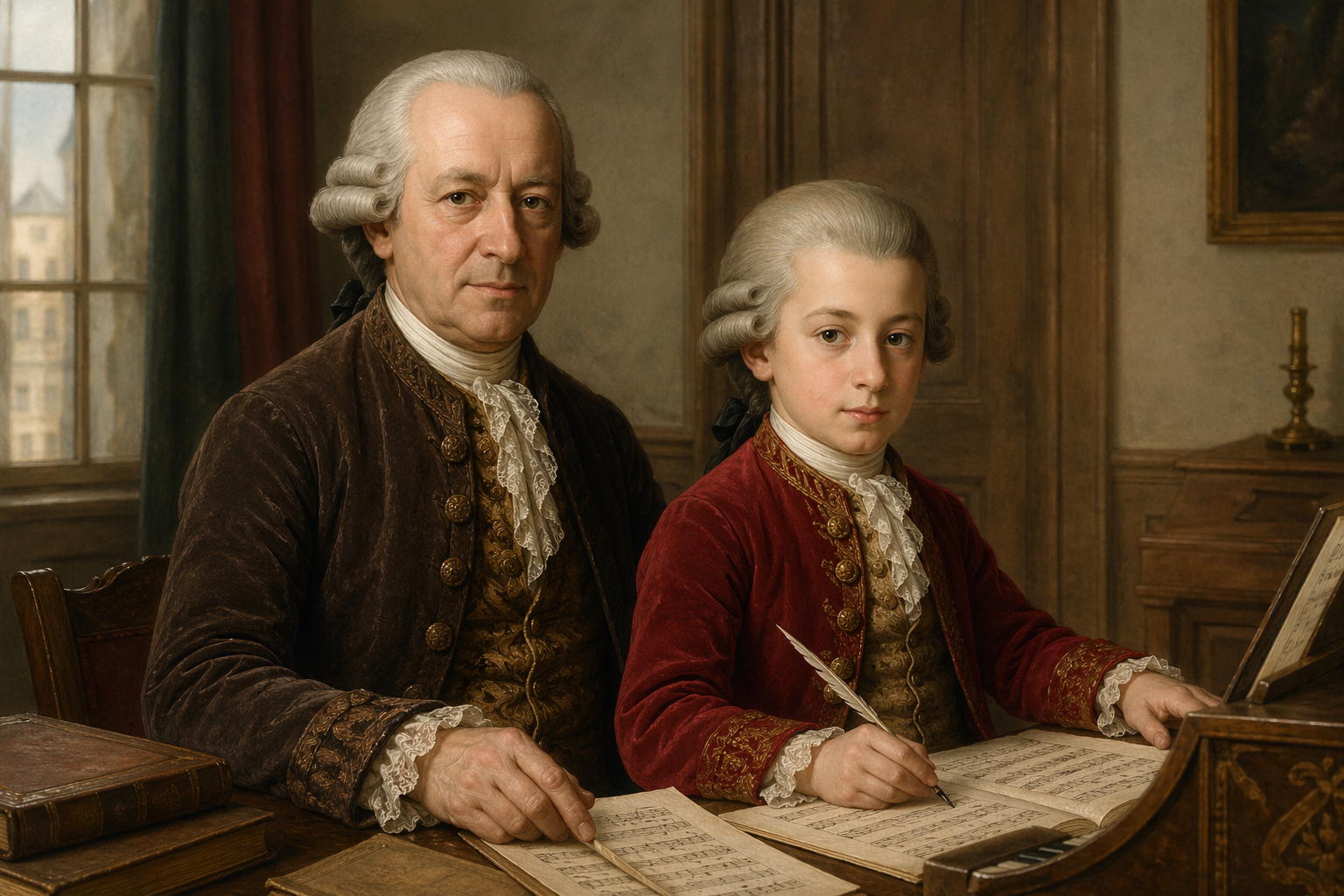
In the mid-1700s, a court musician in Salzburg, Austria named Leopold Mozart realized his young son was unlike anything the world had seen.
Wolfgang was four years old when he began picking out melodies on the keyboard by ear. By five he was composing. By six, Leopold had pulled him out of any normal childhood and taken him on the road where they toured the courts of Europe, performing before kings and queens, drawing crowds that could not believe what they were hearing from a child.
Leopold gave everything to his son's gift. He rearranged his entire life around it. He wrote the teaching method. He managed every concert. He negotiated every commission. He believed the gift in this boy was something once in a generation, and he was determined not to see it go to waste so he gave his life to protect and develop it.
But somewhere along the way, the love changed shape.
As Wolfgang grew into adulthood, Leopold's protection became control. His investment became ownership. When Wolfgang was in his twenties and wanted to leave Salzburg, take his own commissions, build his own life as a composer— Leopold could not release him. He argued. He guilt-tripped. He wrote letters filled with pain and accusation.
Their correspondence, which survives in full to this day, documents a fracture that never fully healed.
Wolfgang eventually left anyway and Leopold never forgave him. He died in 1787, estranged from the son he had sacrificed everything for, never knowing that the music Wolfgang would write in those years of his hard-won freedom would make him one of the most celebrated composers in all of human history.
The gift had been real, but the grip had become the problem. And Leopold never got to see how the release he refused to give turned out to be the very thing the gift required to thrive.
Realistically, most of us will never manage a child prodigy. But most of us know what it is to hold something God gave us so tightly that we stopped being able to tell the difference between us holding it and it holding us.
It might be a child. A career. A relationship. A season of life. A dream. A certain lifestyle. Something genuinely good— something God put in your hands— that slowly, without you noticing, moved from an open palm to a closed fist.
Genesis chapter 22 is one of the most haunting chapters in all of Scripture. And the reason readers have returned to it for the past four thousand years is not the drama on the surface, but because it asks every person who reads it the same quiet, soul-searching question: what are you holding right now that you have stopped holding before God?
This morning we contemplate the answer to that question.
SERIES RECAP
We’re on a teaching series through the first book of the Bible, Genesis chapters 12–50 called GENESIS: The Promise. To bring us up to speed, here’s what we need to know.
God called a man named Abram, who he renamed to Abraham, out of everything familiar and sent him toward a land and a future he couldn't yet see.
God’s promised him: I will make you a great nation, and through you I will bless the whole world. One teenie tiny problem was that Abraham’s wife, Sarah, couldn’t have children. But Abraham said ‘yes’ to God and went anyway.
Last week, we walked through chapters 15-17, the night God made that promise binding by entering the blood path covenant ritual alone, walking through it for both parties, binding himself to his own word and assuming the consequence should there be a covenant breach. God ensured the promise wouldn’t rest on Abraham's faithfulness. It would rest entirely on God's. That’s the foundation under everything we’re about to see.
Circumcision then becomes the physical commitment to the Abrahamic Covenant by directly connecting the blood path ritual as a reminder for the men on a daily basis when they visually see their man parts and for the women when they are intimate with them.
The next chapter in Abraham and Sarah’s life becomes a laughing matter.
THE LAUGHTER THAT CHANGED: Genesis 18, 21
In Genesis chapter 18, three visitors arrive at Abraham's tent near the oaks of Mamre. One of them who may have been the Lord himself, or a divine representative speaking with full authority, delivers news to Abraham that Sarah, closely listening from inside, cannot believe:
Genesis 18:10 CSB"I will certainly come back to you in about a year's time, and your wife Sarah will have a son."
Sarah laughs. Not mockingly, but in honest disbelief. I mean, I could understand why. Abraham and Sarah are old— like respectively nearly 100 and 90 years old. This occurred 25 years after Abraham first received God’s promise that he would have a son so I’m sure they had almost given up all hope.
The beauty of what God was describing in this interaction, from every visible human angle, was impossible. But God hears Sarah laugh and asks a question that carries an echo through the rest of these chapters:
Genesis 18:14 CSB "Is anything impossible for the Lord? At the appointed time I will come back to you, and in about a year Sarah will have a son."
In Genesis 21, we see God made good on his promise. Isaac is born.
Sarah laughs again, but this time the sound has completely changed. Same woman. Same sound. Entirely different meaning. The laughter that was a defense against doubt and disappointment has become the laughter of someone standing on the other side of an impossibility. God redeemed the very sound of her doubt and turned it into joy with the blessing of their promised child.
Because of that, God intentionally gave them a name for this child that resounded a lasting meaning. In Hebrew, his name is Yitzhak (eet-tsahk). It means laughter. God took the very sound of their unbelief and wove it into the name of the promise itself.
Every time Sarah shouted her son’s name to come inside for dinner, she was reminded of God’s promise fulfilled.
Every time Abraham called out to his son to help him milk the goats, he was declaring God’s word is true.
Every time somebody called that boy's name, they were speaking a testimony. Amen?!
The doubt became the name. The name became the evidence. But the time was soon approaching when God would put Abraham to the test to truly see if the One who had carried a promise faithfully for twenty-five years, who turned the very thing that exposed his and Sarah’s weakness into the thing that announced God’s faithfulness was worth everything to him. We shall see.
THE WORLD AROUND THE PROMISE: Genesis 19–20
Before we reach the mountain for the test, the Biblical text reads us in to the world around Abraham's story.
In Genesis 19, Sodom, the city where his nephew Lot was living, and its nearby neighbor Gomorrah, are destroyed for their deeply depraved wickedness and sexually based offenses of the most heinous kind.
Lot's wife, fleeing with her family, cannot release her grip on the life she was leaving and looked back. Abraham’s divine visitors specifically told them never to look back and go, run, flee the city. The moment she turned she became a pillar of salt, a preserving marker of what it costs to refuse to move forward with God when he calls you to trust him and go.
In Genesis 20, we experience déjà vu when Abraham makes the same fearful mistake he made 8 chapters earlier (probably around 30 years earlier for him)— manipulating an untenable situation about Sarah being his sister in an attempt of self-protection, clinging to his own strategy when fear shows up.
And yet God protects them anyway. The covenant doesn't collapse when Abraham blinks and stops trusting for a moment. Remember, the promise survives not because of his faithfulness, but because of God's. That’s inside the world which Isaac was born, and it’s the truth Abraham was still learning when he walked toward the mountain.
THE MOUNTAIN MOMENT: Genesis 22 (The Aqedah)
Genesis 22:1-18 CSB
“After these things God tested Abraham and said to him, “Abraham!” “Here I am,” he answered. “Take your son,” he said, “your only son Isaac, whom you love, go to the land of Moriah, and offer him there as a burnt offering on one of the mountains I will tell you about.”
[Wait what?!! Come again God!! My 100 year old ears are having trouble hearing you.
I think at that moment the very first abrupt scratching stop sound of the record player was heard.]
So Abraham got up early in the morning, saddled his donkey, and took with him two of his young men and his son Isaac. He split wood for a burnt offering and set out to go to the place God had told him about. On the third day Abraham looked up and saw the place in the distance. Then Abraham said to his young men, “Stay here with the donkey. The boy and I will go over there to worship; then we’ll come back to you.” Abraham took the wood for the burnt offering and laid it on his son Isaac. In his hand he took the fire and the knife, and the two of them walked on together. Then Isaac spoke to his father Abraham and said, “My father.” And he replied, “Here I am, my son.”
Isaac said, “The fire and the wood are here, but where is the lamb for the burnt offering?” Abraham answered, “God himself will provide the lamb for the burnt offering, my son.” Then the two of them walked on together. When they arrived at the place that God had told him about, Abraham built the altar there and arranged the wood. He bound his son Isaac and placed him on the altar on top of the wood. Then Abraham reached out and took the knife to slaughter his son. But the angel of the Lord called to him from heaven and said, “Abraham, Abraham! ” He replied, “Here I am.”
[I think that needs a few desperate exclamation points after that.
By the way, just a quick sidenote, anytime you see the Biblical text say “the angel of the LORD” that is essentially God himself speaking and communicating a specific message to someone. Remember, Angel is Greek for messenger. It’s not a title of a being— it’s a function. There are angels (messengers) sent by God for a purpose of communicating, but when it specifically says “the angel of the LORD”, that is God himself in Word or Person form. You’ll see this confirmed in the next part.]
Then he said, “Do not lay a hand on the boy or do anything to him. For now I know that you fear God, since you have not withheld your only son from me.”
[The angel of the LORD said, “you have not withheld your only son from me”. That’s God speaking to Abraham.
I could just picture the sweat on Abraham’s brow. And Isaac— can you imagine what was going through their minds?!]
Abraham looked up and saw a ram caught in the thicket by its horns. So Abraham went and took the ram and offered it as a burnt offering in place of his son.
And Abraham named that place The Lord Will Provide, so today it is said, “It will be provided on the Lord’s mountain.”
Then the angel of the Lord called to Abraham a second time from heaven and said, “By myself I have sworn,” this is the Lord’s declaration: “Because you have done this thing and have not withheld your only son, I will indeed bless you and make your offspring as numerous as the stars of the sky and the sand on the seashore. Your offspring will possess the city gates of their enemies. And all the nations of the earth will be blessed by your offspring because you have obeyed my command.””
The angel of the LORD, the Lord himself was going to bring about this blessing through Abraham and Isaac.
Chapter 22 is a significant hinge point in Abraham’s life and Jewish tradition has a name for what happens. They call it the Aqedah (ah-kay-DAH). It’s a Hebrew word that means the binding. The significant moment is not in the raised knife but when Abraham bound his son and placed him on the wood of the altar.
Isaac is the covenant carrier— binding it together— the one through whom God said the blessing of all nations would flow.
Two other Hebrew words in this passage carry the whole chapter.
The first is the word nissahmeaning tested. More specifically, it means to prove something by putting it under pressure to certify what it is actually made of. This was not in a cruel way, but nissah was how you confirmed something as genuine.
The text alludes that God was not surprised by what Abraham would do. He already knew. The test was for Abraham — so Abraham would know, and so the watching world would know, what was truly living at the center of this man.
It’s hard to know who someone really is until they’re tested.
The second word comes right after God calls his name. Abraham answers with a single word: hineni (hee-NEH-nee). We translate it 'here I am,' but that’s too thin for what it carries. Hineni means something closer to: I am fully here. I hold nothing back. I am entirely yours. My hands and arms are wide open.
It appears at the most pivotal moments in all of Scripture with Moses at the burning bush, Isaiah in the temple when he said “here am I, send me”, Samuel in the night when God called his name.
Every time a person is about to be asked for something that will cost them everything, they say this word.
Abraham says hineni not once in this chapter but three times. First we see him respond to God in verse 1, to his son in verse 7, and to the angel of the Lord in verse 11. Three times, before he knows how this test ends he says: I am here. I hold nothing back. I am entirely yours. My hands and arms are wide open.
This entire interaction begins when Abraham rises early, saddles his donkey, cuts the wood, and travels three days. On the third day, he tells his servants to stay behind, and then he says something even more revealing about the posture of his heart.
Genesis 22:5 CSB He said, “Stay here with the donkey. The boy and I will go over there to worship; then we’ll come back to you.”
We’ll come back. Both of us. The New Testament book of Hebrews tells us:
Hebrews 11:17–19 NLT “It was by faith that Abraham offered Isaac as a sacrifice when God was testing him. Abraham, who had received God’s promises, was ready to sacrifice his only son, Isaac, even though God had told him, “Isaac is the son through whom your descendants will be counted.” Abraham reasoned that if Isaac died, God was able to bring him back to life again. And in a sense, Abraham did receive his son back from the dead.”
When they reached the mountain, Isaac asked the million dollar question.
Genesis 22:7–8 CSB "'My father.' 'Yes, my son.' 'The fire and the wood are here, but where is the lamb for the burnt offering?' Abraham answered, 'God himself will provide the lamb for the burnt offering, my son.'"
God himself will provide. Abraham didn't know this was a prophecy when he said it. He answered the only way he could in a headspace of confusion. But he was speaking truer and clearer than he realized— not just about that morning or that mountain, but about the entire arc of the Biblical story he was living inside.
Abraham binds Isaac. He places him on the altar. He raises the knife. And God stops him.
Hineni — one final time.
Right up to the edge of everything, and still he says: I am here. I am yours. My hands and arms are wide open.
True to form, God provides a ram in the thicket. Abraham offers it in place of his son and names the mountain Yahweh-Yireh. The Lord will provide. But the Hebrew root underneath that name — ra'ah — actually means to see. A more literal rendering is: the Lord will see to it.
God showed up. The geography and the theology are written from the same Hebrew word. On this mountain, God sees. On this mountain, God provides.
Now here’s what the text intends for us to sit with.
God revealed to us from the beginning this was a nissah— a proving. He was never going to let Isaac die there. What he was after was never Isaac's life. He was after Abraham's heart. Because twenty-five years of waiting had produced Isaac. And there was a real possibility — entirely human, entirely understandable — that Isaac had slowly moved from being held in Abraham’s heart to holding his heart entirely. He was holding onto the thing from God rather than onto God himself.
Leopold Mozart poured his whole life into a gift and the grip became the problem. Abraham poured his whole heart into a son and God, who loved him, came after the grip before it consumed him.
God was asking, are you still holding onto me — or have you started holding onto what I gave you?
MORIAH AGAIN
Mount Moriah doesn’t disappear after Genesis 22. It appears in two other significant places in all of Scripture. In 2 Chronicles 3:1, we see Solomon built the temple on the Eastern ridge of Mount Moriah. It was the same ridge, the same geography. And centuries later, on the northern edge of that same terrain outside Jerusalem, a hill called Golgotha becomes the site of a cross.
Abraham stood on that mountain. Jesus died on that mountain.
On Moriah, God stopped Abraham's hand. He provided a ram and spared the son. But on Calvary, Jesus brought the story full circle on the same ground— but there was no ram and no call down from heaven. God provided the sacrifice himself, and this time…
Romans 8:32 CSB "He did not even spare his own Son but gave him up for us all."
When Abraham told Isaac God himself will provide, he was speaking a truth that would not be fully realized for two thousand more years.
The ram in the thicket was a foreshadow on the final provision God had already proposed and set in motion. The mountain in Genesis 22 was always pointing somewhere. Abraham saw it from a distance, with eyes of trust. We see it now from the other side of the cross, for what it always was. The place where the Lord sees. The place where he provides. The place where, at the deepest cost to himself, he opened his own hands.
Hineni — one final time.
THE QUIET ACT OF FAITH: Genesis 23
Genesis 23 then sneaks in as the quietest chapter in this stretch of text. Sarah dies, and Abraham mourns her. Then he does something that seems small but carries enormous theological weight. He purchases the cave of Machpelah — the first piece of land he has ever actually owned in Canaan. He pays full price, on record, in front of witnesses. This is it: one cave, in the land God promised him. All he owns before he dies is a place to bury the dead.
But he buys it. He plants a stake.
"The purchase of the burial plot is not simply a practical necessity. It is a theologically freighted act — an anticipation of what has not yet come, a wager on the promise that still waits to be fully redeemed." -Walter Brueggemann, Genesis (Interpretation Commentary)
That is what faith looks like at the end of a long life. Not triumph. Not another mountaintop moment. Just a man standing at a cave he just bought, in a land that is not fully his yet, trusting that the God who carried him this far is not finished. God finishes what he starts. And sometimes the evidence of that is not a ram in a thicket. Sometimes it's a deed to a field the rest of the promise still has to catch up to.
PRAY: Hineni as a Daily Practice
So what was the mountain really about?
It wasn’t about whether Abraham would obey a shocking command. It was not about Isaac's life. It was about the God who calls us, the God who covenants with us, the God who gives us the very thing we waited so long to receive. The mountain is the reality that God will not share your heart with the gift he gave you. He loves you too much for that.
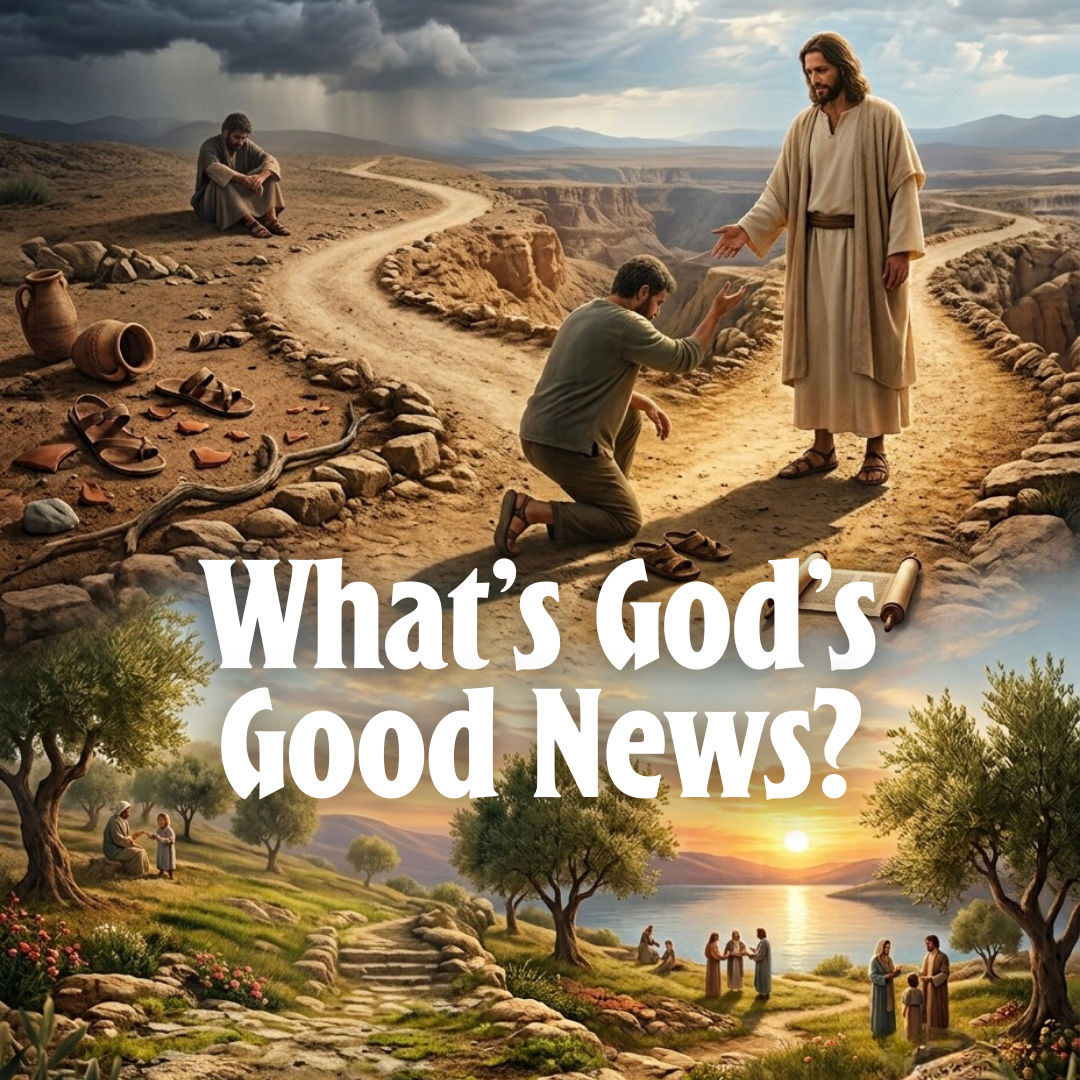
He will come after the thing that has slowly moved from your open hands to your closed fist. Not to punish you, but to free you.
God finishes what he starts. From Sarah's laughter to a mountain in Moriah to a cave in Machpelah to a cross outside Jerusalem— the promise held. Not because Abraham held it. Because he trusted in God who did. The same is true of our story right now.
Jesus gave us a command that is the most direct response to everything this passage asks of us. Pray. Not as a religious obligation or as a technique for getting what you want from God. Pray as hineni — the daily practice of offering to God with open hands and saying, I am here. I hold nothing back. I am entirely yours.
This is what prayer actually is, at its core. Not a monologue directed upward with a wish list. Prayer is the posture like Abraham on the mountain showing up before God with the very thing you love most, the very thing you’ve been holding tightest, and releasing it back to the One who gave it.
Leopold Mozart held his son's gift so tightly he lost the relationship. Abraham, by the grace of God who stopped his knife clenched hand, learned to hold his son differently. Prayer is how we learn to hold everything differently.
It’s the daily discipline and practice of open hands for relationship with God.
So here’s what we carry out of this room today. Before anything else tomorrow— before your phone, before the news, before you plan your day or even eat breakfast— sit quietly before God, just for a moment even on the edge of your bed, and say to him the word: Hineni. Here I am.
Then name the thing you’ve been holding too tightly. Bind it and put it on the altar. Not because God is going to take it. But because you were never meant to hold and carry it the way you have been.
Whatever you’re waiting on.
Whatever you handed to God and slowly took back.
Whatever promise feels impossible from where you're standing today.
Set it on the altar before God.
And if you have never said yes to Jesus — the One the ram on Moriah pointed toward as the final sacrificial Lamb, the final and complete Yahweh-Yireh (the God who sees to it), the One for whom no angel from heaven stopped the hand — this is your moment. He’s not asking you to come cleaned up or do anything religious— just the opposite. He’s not asking you to have it all figured out first. He’s asking what he has always asked.
He’s asking for you to say: Hineni.
Let’s practice hineni now.
Let’s open our hands and arms in the posture of hineni.
Let’s say it back to God together: Hineni.
Here I am.
I hold nothing back.
My hands and arms are wide open. And I hold nothing back.
I am entirely yours.
That’s God’s invitation on the mountain.
That’s his invitation in the valley.
This has always been his invitation.
Will you accept it?
Hineni — one final time.
If you found value in this, here are some additional articles for you.