When the Fracture Spreads
This sermon was preached at Sherwood Community Friends Church on Sunday, March 1. You can watch the video in full by clicking below.
We live in the age of comparison.
Every day we’re handed curated windows into someone else's life. You open your phone in the morning, and before your feet hit the floor you've already seen:
Someone's vacation that looks like a dream
Someone's marriage that looks perfect
Someone's body or morning routine that looks disciplined
Someone's house that looks impressive
Someone's kids who look obedient
Someone’s success that looks like the life you thought would be yours by now.
And we weren't even looking for it — it just finds us.
Don't check out yet if you're not on social media. Comparison didn't start with Instagram or TikTok. It started in the human heart and you don't need an app to compare.
You compare in the office when someone else gets promoted.
in the gym when someone lifts more or looks better
at church when someone else is asked to lead
in your neighborhood when a fancy, new car pulls into the driveway
at family gatherings when someone else's kids seem to thrive and are more behaved than your own
internally when you scroll Zillow "just to look"
spiritually when someone talks about their prayer and devotional life
And here's the subtle version we don't admit: we compare our struggles to someone else's strengths. Or worse, we compare our strengths to someone else's weaknesses.
And if we're not careful, even opting out of social media becomes its own quiet comparison.
"I don't need that."
"I'm not like those people."
"At least I'm not caught up in that."
It’s all still comparison. It may feel cleaner, but the root is the same.
The quiet measuring.
The internal scoreboard.
The subtle evaluation of where I stand in relation to you.
And comparison never stays neutral. It does something to us.
At first it just whispers. Why them? Why not me? What am I missing? Am I behind?
Then it tightens. Maybe God favors them more. Maybe I'm overlooked. Maybe I need to prove something. Why can’t I have that?
And eventually — if left unchecked — it hardens us. Resentment. Withdrawal. Self-protection. Quiet contempt.
We would never say it out loud. But we feel it.
And the scary part is most of us don't think comparison is serious. We think of it as normal.
Genesis chapter 4 is the first time we see comparison among humans turn violent. But long before there was blood in a field — there was a heart measuring against.
Genesis 4 doesn't lead us to something ancient and distant. It leads us somewhere modern and intimate. Because the fracture of trust that began in Genesis 3 with a suspicion of God now spreads horizontally. And it begins exactly where our current culture lives: comparison.
Of course, you may never physically harm someone. But you can emotionally withdraw. You can quietly posture against someone. You can rejoice at their failure. You can gossip. You can diminish their success in conversation. You can subtly compete in spaces meant for communion. You can plant seeds of division into the minds of others. You can twist words to manipulate something not in your favor.
Genesis 4 shows us what happens when comparison is not confronted. It escalates from insecurity…
to anger…
to dehumanization…
to violence…
to de-creation…
and back to disorder.
We must honestly ask God's Spirit to reveal: Where does comparison live in me?
That's where we're going today.
Genesis Context
We're in a series exploring Genesis, the first book of the Bible, traditionally understood to have been written by Moses for the Israelites, likely in the mid-15th century B.C., as they were learning who they were and who their God is.
Genesis is a book of beginnings. But not just beginnings of events. Beginnings of identity. Beginnings of allegiance. Beginnings of vocation. Beginnings of redemption. Genesis introduces the central themes that will echo through the entire Bible: creation, covenant, trust, rebellion, promise, and restoration. Everything that unfolds from Exodus to Revelation is rooted here.
The Eastern mind, which is the world of the Biblical authors and audience, does not simply hand us conclusions. It invites us into discovery. The text does not always say, "Here is the answer." It often says, "Come walk the path."
Western minds want the black and white facts. Clear and quick clarity. Just tell me what it means.
But discovery awakens something inside of us that information alone cannot. When we uncover something because we wrestle with it, tracing its theme across many chapters, something begins to be shaped within us that changes us. The pathway from Genesis to Revelation is not a scavenger hunt for one right answer. It is a lifelong journey of discovery. Of tension. Of wrestling. Of watching how God's people learn — and often fail — to walk with him in real, complex, ever-changing lives.
That's why this series matters.
Where We've Been
Over the past few weeks, we've been slowly walking through Genesis chapters 1–3. Whether you've been here every week or this is your first Sunday with us, welcome and here's what you need to know to follow where we're going today.
In the beginning, we saw God order the cosmos. He created time. He established boundaries. He separated light from darkness and land from sea so life could flourish. On the sixth day, God formed his masterpiece, humanity — male and female together — and breathed his own life into them to be his image bearers: equal partners with shared vocation invited to reflect God's character into his ordered world.
He placed them in a garden in Eden which served as sacred space, a garden-temple where heaven and earth overlapped because God was there with his people. Humanity's task was to extend God's order outward into the world by stewarding what he had made.
Last week, as we turned into Genesis 3, we noted what that chapter does not primarily do. It does not explain the metaphysical origin of evil. It does not give us a scientific account of inherited sin. It does not function as a courtroom transcript of how humanity was corrupted.
What Genesis 3 reveals is something closer and more unsettling. It reveals the human will.
The serpent deceptively introduced suspicion of God's character: "Did God really say?" "Can you trust him?" "Is he withholding something from you?" And humanity chose not merely to eat fruit, but to seize autonomy, to define good and evil on their own terms, and to secure wisdom apart from relationship with God.
Trust was traded.
And the consequences were not merely behavioral. They were deeply relational. Think of it this way: a fish detached from water doesn't just struggle. It dies. A plant uprooted from soil doesn't just wilt. It dies. In the same way, humans detached from God — our source of life — begin to spiritually die. Alienation entered. Shame entered. Blame entered. Exile began relationally first, then geographically.
Genesis 3 shows us that when we detach from God as our life source, chaos begins to creep back in.
Here is the critical movement we must hold onto as we enter chapter 4:
Genesis 3 is a vertical fracture between humanity and God.
Genesis 4 is a horizontal fracture between humans.
When trust in God weakens, comparison between people intensifies.
From suspicion… to rivalry… to bloodshed. The garden gives way to a field.
Let's step into it.
Worship Distorted
Genesis 4 opens not with violence, but with worship. And this is important, because it tells us that what happens between brothers Cain and Abel is not primarily a story about jealousy. It is a story about what distorted worship does to us.
Genesis 4:1–5 CSB
"The man was intimate with his wife Eve, and she conceived and gave birth to Cain. She said, 'I have had a male child with the Lord's help.' She also gave birth to his brother Abel. Now Abel became a shepherd of flocks, but Cain worked the ground. In the course of time Cain presented some of the land's produce as an offering to the Lord. And Abel also presented an offering — some of the firstborn of his flock and their fat portions. The Lord had regard for Abel and his offering, but he did not have regard for Cain and his offering. Cain was furious, and he looked despondent."
Notice the problem is not that Cain failed to worship. He brought an offering. This isn't about irreligion. It's about heart posture.
The text gives us subtle clues: Abel brings the firstborn and their fat portions which implies the best offering that costs him something sacrificially. This is language of priority and trust. Cain brings "some" of the land's produce which is vague, unspecified, meaning whatever was at hand. The contrast isn't the species of offering. It's the heart behind it.
Abel came to God with open hands. Cain came to God with an agenda.
And when God does not regard the offering, Cain doesn't ask why. He doesn't adjust. He doesn't lean in. He turns outward with his finger pointed and eyes fixed on his brother.
This is the anatomy of wounded pride: when we cannot perform, we begin to compete with each other.
But here in the story, God does not ignore Cain. He moves toward him.
Genesis 4:6–7 CSB
"Then the Lord said to Cain, 'Why are you furious? And why do you look despondent? If you do what is right, won't you be accepted? But if you do not do what is right, sin is crouching at the door. Its desire is for you, but you must rule over it.'"
God told Cain he had a choice. The same choice his parents faced, trust or autonomy, obedience to do what was objectively right or self-rule what you feel is right in your own eyes. And God made something clear: Cain could choose to do the right thing. Or he could be swallowed by what’s crouching at the door.
Why did God warn Cain at all? Why not simply let the consequences unfold?
Because God allows evil precisely because he values human free will— because he loves us. And genuine love — real love — cannot be forced. It requires the real possibility of choosing otherwise. God never coerces worship. He never manufactures devotion. He extends the invitation and gives us the choice to come to him. That is true love. Forced love is not love at all.
So before Cain ever lifted a hand against his brother God saw what was forming in his heart and gave him a genuine way out. He said: "Do what is right. Sin is crouching at the door. You must rule over it."
God’s warning was mercy. His invitation was real. And Cain walked past both.
Charlie

Think of sin like a cute Chihuahua named Charlie. He’s so cute and adorable. He follows you around wherever you go because he wants to be near you. You pick him up, hold him close, and nestle him against your chest. One day as you’re walking from the bedroom into the kitchen, for no reason at all, he just starts biting and attacking your ankles without relent. Cute Charlie becomes a vicious beast that latches on and won’t leave you alone.
Road Trip
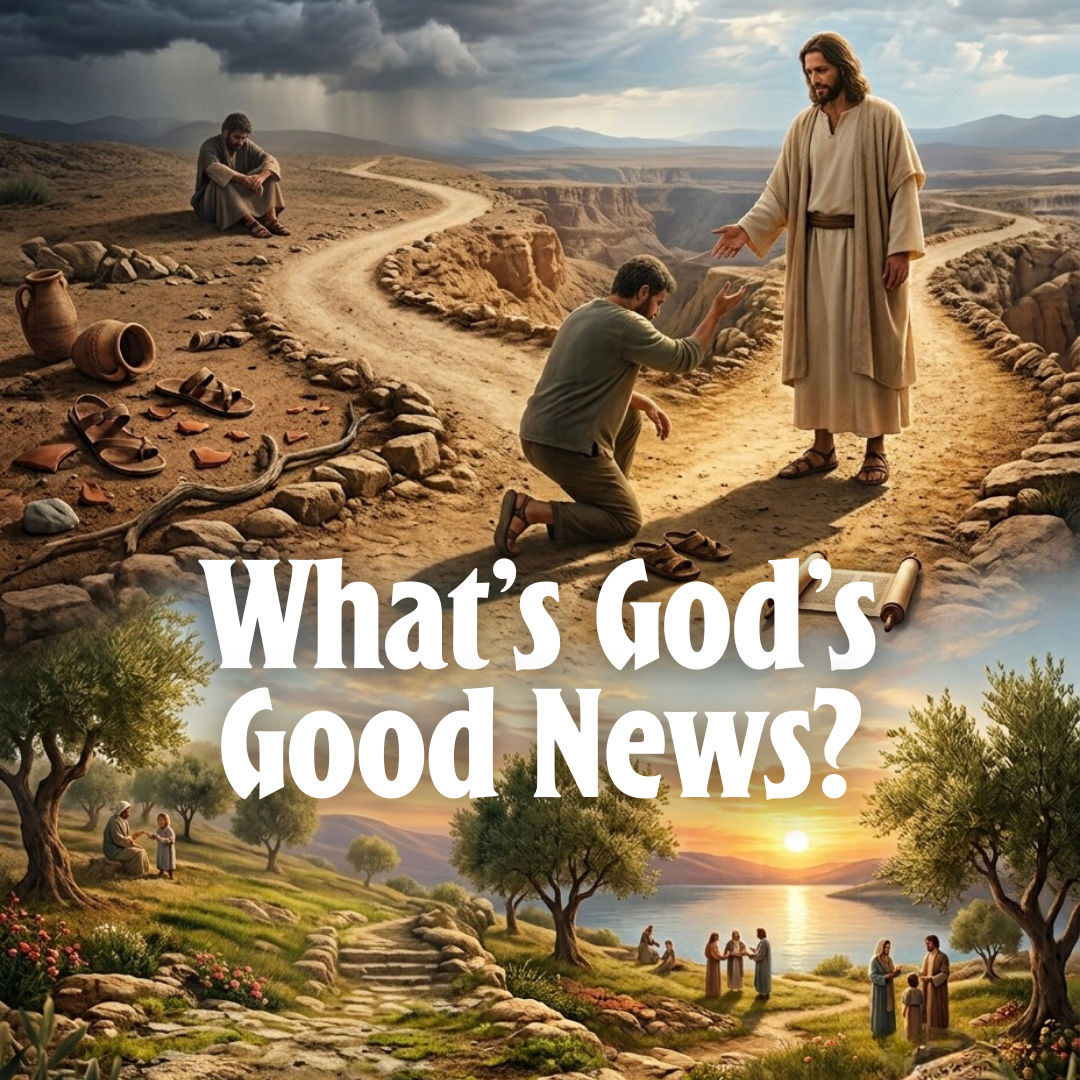
Think of sin crouching at our door like driving a car. When we take our hands off the wheel, the car may go straight for a while. But the moment the road curves, the car follows the deviation. It drifts toward the curb, the ditch, toward something that will destroy it. The longer we drift, the closer we move to disaster.
We must keep our hands on the wheel with our eyes fixed forward.
The Kingdom of God does not shift or move. God’s path is steady, narrow, and constant. God is always ahead of us — if we choose to drive in his direction instead of drifting away. And when we drift, and we will, we know how to navigate back because we have the map of God’s Word. We have the practice of prayer. These bring us back into alignment.
But sometimes we don't just drift. Sometimes we drive straight into a desert storm. The dust rises. The wind howls. Visibility drops to almost nothing. Everything around you pushes you off course. And in those moments, the temptation is to stop — to wait it out, to park until it passes.
But stopping only intensifies the chaos around you. The only way through is forward by trusting the One who knows the way even when you cannot see it.
This is where surrender becomes the act of faith. You still operate the gas pedal. You still move forward. But you trust him to steer. You allow him to hold the wheel for a while through what you cannot navigate alone.
And here's the tension. At any moment, we can grab the wheel back. We can swerve. We can slam the brakes. We can insist on our own route. But the desert shapes us when we trust him to guide us through it. The dust, the darkness, the uncertainty, the challenge of the refining fire — they grow us. They train our hearts to trust the One with the map.
He never shames us for gripping the wheel too tightly. He never mocks us for not knowing the way. He simply waits for us to loosen our grip.
Jesus said, "I am the Way, the Truth, and the Life." (John 14:6)
He is the man with the map. And he is sitting right beside us the whole time.
What Cain refused to do was loosen his grip, do what is right, and trust the One speaking directly to him holding the map. This was exactly what God was inviting him to do at that moment.
Comparison Corrodes Love
Notice how, in that interaction, Cain never even communicates with God. He speaks to his brother.
Genesis 4:8 CSB
"Cain said to his brother Abel, 'Let's go out to the field.' And while they were in the field, Cain attacked his brother Abel and killed him."
The first death in Scripture is violence between brothers, born of comparison.
The Hebrew name for Abel = hěʹ·ḇěl (hevel) = means vapor, breath, fleeting. It's the same word used throughout the book of Ecclesiastes for the fragility of life. Abel's life becomes a vapor indeed. And yet the deeper tragedy is relational.
Genesis 4:9 CSB
"Then the Lord said to Cain, 'Where is your brother Abel?' 'I don't know,' he replied. 'Am I my brother's keeper?'"
Whoa!!! Cold Cain.
This moment echoes Genesis 3. After Adam and Eve chose autonomy, God came walking in the garden and asked them, "Where are you?" — not because he lacked knowledge of their location, but because he was inviting confession. He was giving them space to realize where their hearts had drifted.
Now, one chapter later, he asks their son Cain a similar question: "Where is your brother?"
Again, not because he doesn't know, but because he is extending mercy, giving Cain the chance to come clean by searching his own heart.
Adam and Eve, though defensive, showed some awareness of what they had done. Cain shows none. No remorse. No grief. No brokenness. Just deflection.
In Genesis 3, shame hid. In Genesis 4, defiance hardens.
Am I my brother's keeper?
These words still echo for us today.
Am I responsible for that? How is that my problem?
Genesis 1 told us we are God's order-bringing imagers, his representatives, called to reflect his character into the world. Genesis 4 shows us what happens when imagers refuse responsibility and represent their own desires.
We were meant to keep the garden. Cain refused to keep his brother.
And creation responded.
Genesis 4:10 CSB
God said, "What have you done? Your brother's blood cries out to me from the ground!"
In Genesis 1, God created the ground to produce life. In Genesis 4, the ground absorbs blood. The soil itself testifies that something is profoundly wrong.
In the ancient world, blood crying from the ground signals covenant violation. Creation itself reacts to violence because the world was designed for order. Violence destabilizes it.
Cain took it upon himself to de-create and return what God made very good to a state of disorder. With that, the fracture has moved from vertical to horizontal.
Exile Expands
The text tells us, Cain’s consequence is being sent east.
Eastward movement in Genesis always signals movement away from sacred space. And here Cain goes further still— away from Eden, away from God's presence, away from his family, into the land of wandering.
But notice the Bible tells us God marks Cain for protection. Even here, mercy persists. God does not abandon his human project. Even in exile, he provides just as he provided for Adam and Eve when they were sent from the garden. He does the same for their son.
Cain then finds a place to settle and build.
Genesis 4:17 CSB
"Cain was intimate with his wife, and she conceived and gave birth to Enoch. Then Cain became the builder of a city, and he named the city Enoch after his son."
This is the first city in Scripture and through Cain's line we watch culture emerge. The text announces:
Music appears.
Metalwork develops.
Animal husbandry expands.
Human creativity explodes.
These are genuine gifts. Culture is not the villain here. But right alongside innovation comes escalation.
Enter Lamech— Cain's great-great-great-grandson.
Genesis 4:23–24 CSB
"Lamech said to his wives: 'Adah and Zillah, hear my voice; wives of Lamech, pay attention to my words. For I killed a man for wounding me, a young man for striking me. If Cain is to be avenged seven times over, then for Lamech it will be seventy-seven times!'"
Let’s pause here. Because this is the first recorded poem in Biblical human history and it is a boast about murder.
Let that land.
This actually makes the Lamech passage even more theologically potent when you think about it. There isn't an immediate moral collapse. This is generational drift. Five generations of living east of Eden, building cities apart from God, and by the time you reach Lamech the violence has not only continued, but it has been celebrated.
What Lamech did was more than bragging. He appointed himself judge. He declared his own immunity. He placed himself in the position that belongs only to God. Where God protected Cain, Lamech savagely protects himself. Where God set the terms of justice, Lamech sets his own.
This is autonomy fully arrived. No remorse. No warning. No appeal to God. Just self-justification and escalation.
It’s not all bad because we see that humanity has developed art. Language has become lyrical. These are genuine gifts. But the first song composed is a celebration of revenge. Culture advanced while the human heart degenerated.
The corruption didn't arrive all at once. It settled in slowly, quietly, the way darkness fills a room when the light goes out. We see polygamy appear. Pride intensifies. Violence multiplies. Civilization rises — and so does bloodshed. Because when the human heart moves away from God, what grows in the distance is not progress. It is pride with better tools.
Technological advancement does not equal moral advancement because human brilliance can coexist with spiritual deterioration. Thousands of years later nothing has changed.
We are still capable of building cities and marvelous technology while destroying each other.
Genesis 4 reveals anything built without communion with God will eventually wound someone.
The issue is not culture. The issue is our heart.
Comparison leads to insecurity. Insecurity leads to anger. Anger finds expression — sometimes physical, but always relational.
Hopefully none of us ever strike someone in a field. But Jesus exposed this trajectory in his Sermon on the Mount when he said anger is murder in seed form (Matthew 5:21-26). The root matters as much as the fruit. And Genesis 4 is showing us the root.
The fracture is not solved by building better systems. We need a better heart. And there is only one way to get that. His name is Jesus.
The Quiet Line of Hope
Chapter 4 ends almost quietly.
Genesis 4:25–26 CSB
"Adam was intimate with his wife again, and she gave birth to a son and named him Seth, for she said, 'God has given me another offspring in place of Abel, since Cain killed him.' A son was born to Seth also, and he named him Enosh. At that time people began to call on the name of the Lord."
Seth is born.
Notice something tender. Eve does not say Seth replaces both sons she lost: one to murder, one to exile. She says God has granted another child in place of Abel because Cain took him. You can hear the heart of a mother. Grief does not vanish. Violence leaves scars. But even in loss, she sees a gift from God. God’s grace was at work inside their family’s tragedy. And I think it reveals something of Eve's own heart returning to God, trusting again, and seeing his hand even in the wreckage.
Worship resumes.
"At that time people began to call on the name of the Lord."
We are left with a glimmer of hope held in tension. Violence spreads. Culture grows. Humanity fractures further… and yet… God is not done.
Two trajectories are now forming, and Genesis wants us to see both clearly.
From Cain's line: self-reliance. City-building. Metalwork. Music. Agriculture. Security and order built by human hands, apart from God. This line produces remarkable things. It also produces people like Lamech.
From Seth's line: dependence upon God. "They began to call on the name of the Lord." Later, Kings would come from him as would Jesus, our ultimate king.
One builds strength apart from God. The other builds trust with God.
These two trajectories don't remain in Genesis. They run through the rest of the Bible. Through the prophets. Through the kings. Through the exile and the return. All the way through the Gospels to Revelation where the city of man gives way to God’s newly built city.
Both lines exist today. Every generation chooses which one it walks. And so do we.
From Brother's Blood to Better Blood
Abel's blood cried out from the ground.
The New Testament tells us there is another blood that speaks.
The writer of Hebrews said this:
Hebrews 12:24 CSB
"And to Jesus, the mediator of a new covenant, and to the sprinkled blood, which says better things than the blood of Abel.”
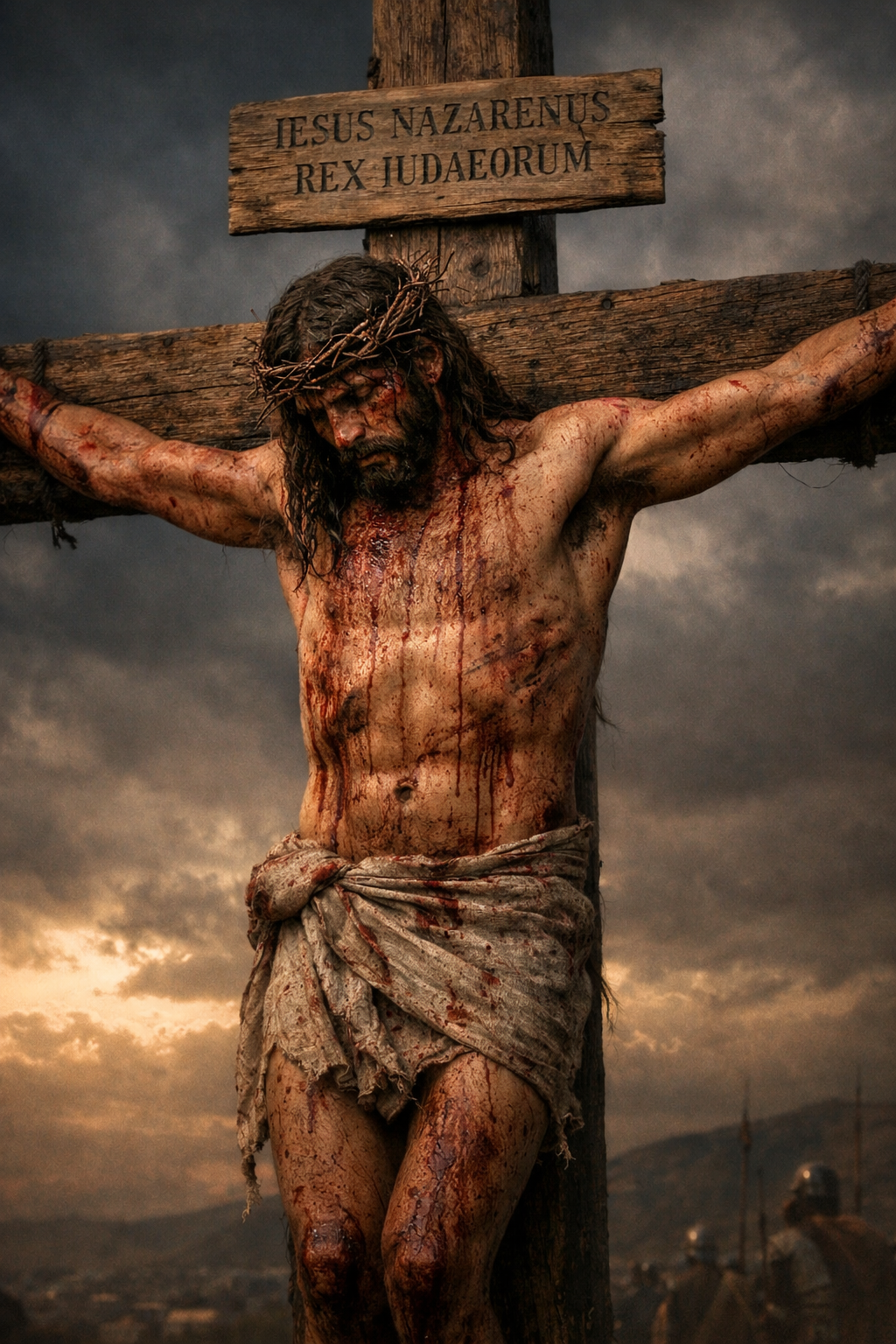
Abel's blood cried out for justice. Jesus' blood answers with mercy and grace.
Where Cain asked, "Am I my brother's keeper?" — Jesus became our keeper.
Where Cain struck his brother in a field, Jesus was struck outside a city on a hill.
Where Lamech escalated vengeance seventy-seven times, Jesus told Peter and us to forgive seventy-seven times.
The Biblical story bends toward relational restoration.
The Biblical story ends not with a city built in pride, but with a city descending from heaven to earth where violence is no more, where God dwells with his people, and where the fracture is finally and fully healed.
His project continues.
Genesis 4 invites us to examine our own hearts.
Where has comparison taken root?
Where has resentment crouched at the door?
Where have you refused to take responsibility?
This is not merely about behavior modification.
It is first about communion with God and then with one another.
Only restored relationship with God (vertically) restores relationship with others (horizontally).
And only Jesus heals both.
He absorbs violence without returning it.
He bears bloodshed without escalating it.
He creates a family not bound by rivalry but by grace.
And his invitation is simple.
Come out of comparison.
Come out of self-protection.
Come out of resentment.
Come to him and call on the Name of the LORD.
Surrender to Jesus and choose today to follow him.
“Walk with [him] and work with [him]— watch how [he] does it. Learn [his] unforced rhythms of grace.” Matthew 11:29 MSG
Because only communion with God can restore community among us.
That is where God’s story is headed.
And he’s still moving toward us.
If you found value in this, here are some additional articles for you.